About Rogue
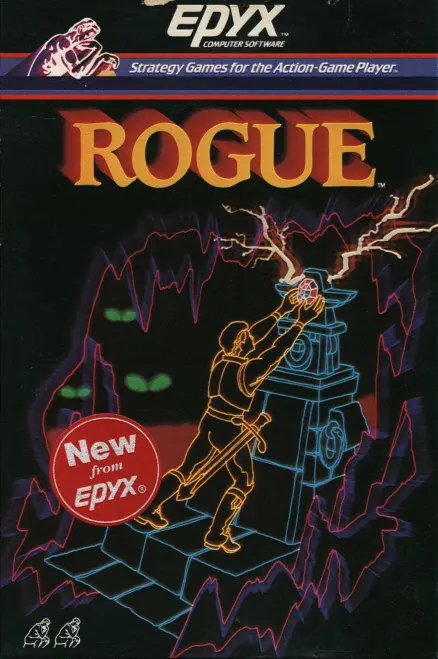
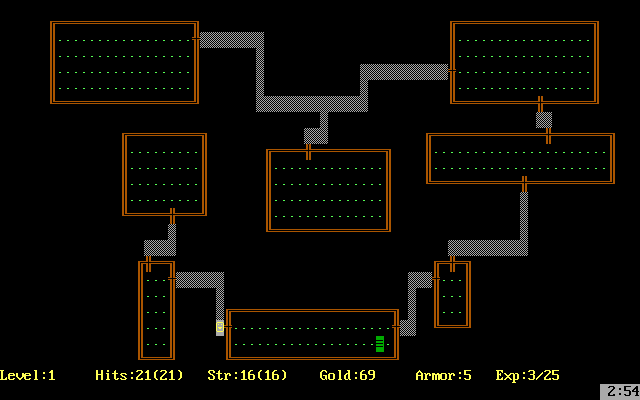
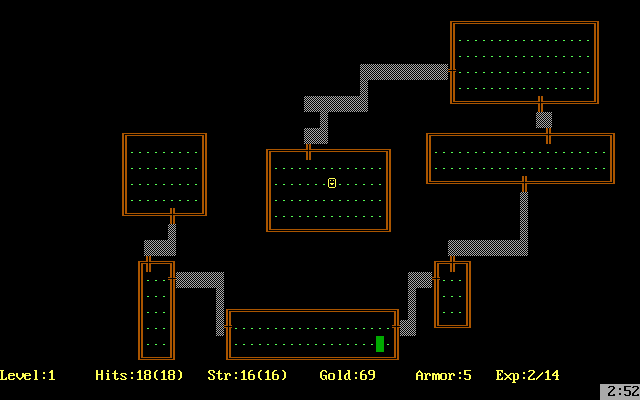
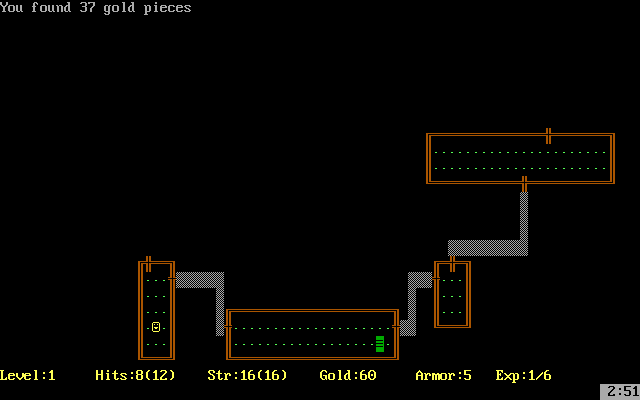
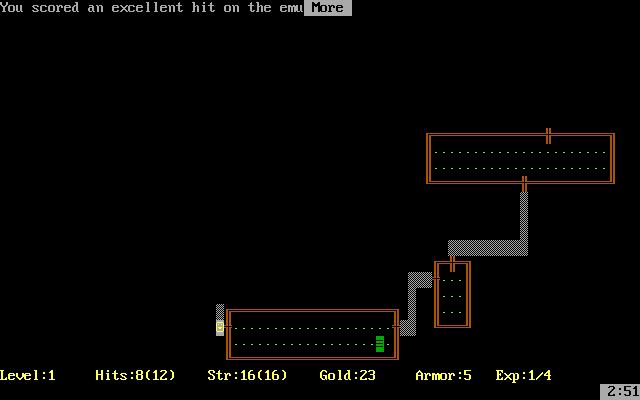
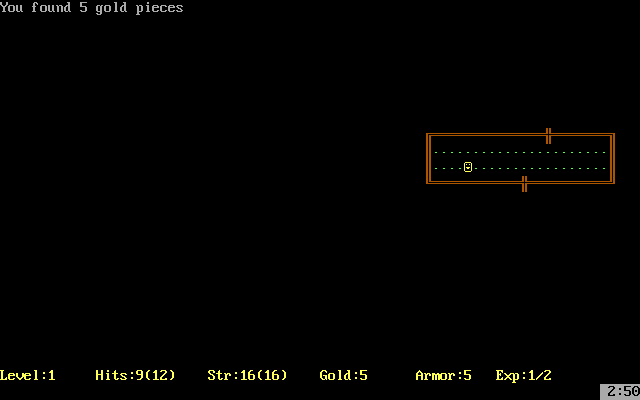
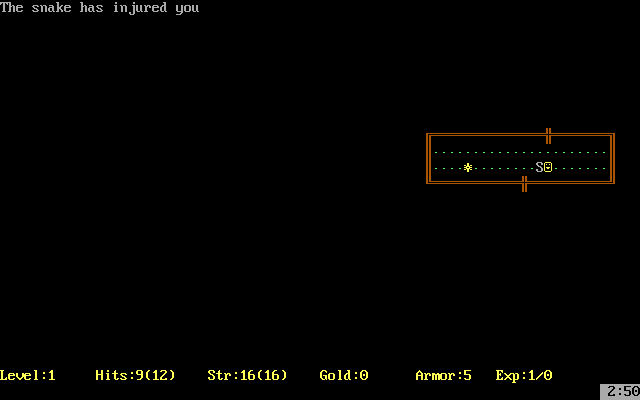
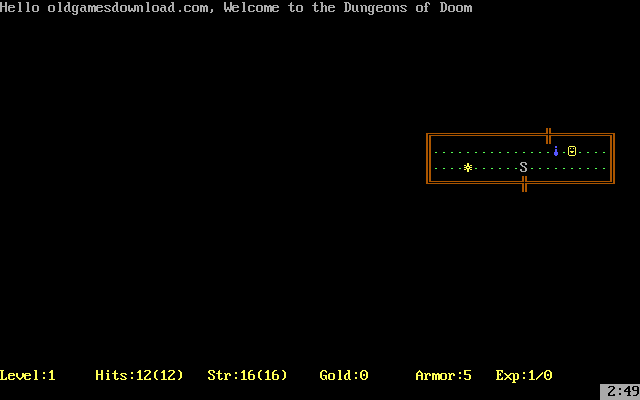
In Rogue, players control a character as they explore several levels of a dungeon seeking the Amulet of Yendor located in the dungeon's lowest level. The player character must fend off an array of monsters that roam the dungeons. Along the way, players can collect treasures that can help them offensively or defensively, such as weapons, armor, potions, scrolls, and other magical items. Rogue is turn-based, taking place on a square grid represented in ASCII or other fixed character set, allowing players to have time to determine the best move to survive. Rogue implements permadeath as a design choice to make each action by the player meaningful—should the player-character lose all their health via combat or other means, that player character is dead. Upon death, since the character cannot respawn, the player must restart with a fresh character or be brought back by reloading from a saved state. Moreover, no game is the same as any previous one, as the dungeon levels, monster encounters, and treasures are procedurally generated for each playthrough.
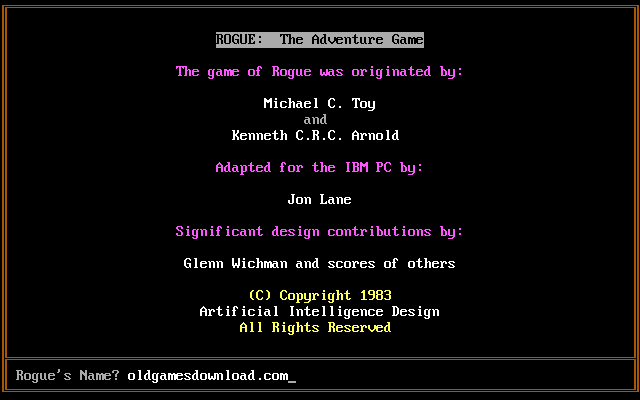
Rogue was inspired by text-based computer games such as the 1971 Star Trek game and Colossal Cave Adventure released in 1976, along with the high fantasy setting from Dungeons & Dragons. Toy and Wichman, both students at University of California, Santa Cruz, worked together to create their own text-based game but looked to incorporate elements of procedural generation to create a new experience each time the user played the game. Toy later worked at University of California, Berkeley where he met Arnold, the lead developer of the curses programming library that Rogue was dependent on to mimic a graphical display. Arnold helped Toy to optimize the code and incorporate additional features to the game. The commercial ports were inspired when Toy met Lane while working for the Olivetti company, and Toy engaged with Wichman again to help with designing graphics and various ports.

1 thought on “Rogue”